Everyone said digitizing West African livestock trade was impossible. The markets are too informal. The herders don't use apps. The trust can't be replicated.
They were wrong.
By escrow, until you confirm.
Not a checkout button.
From the market to the phone, and back.
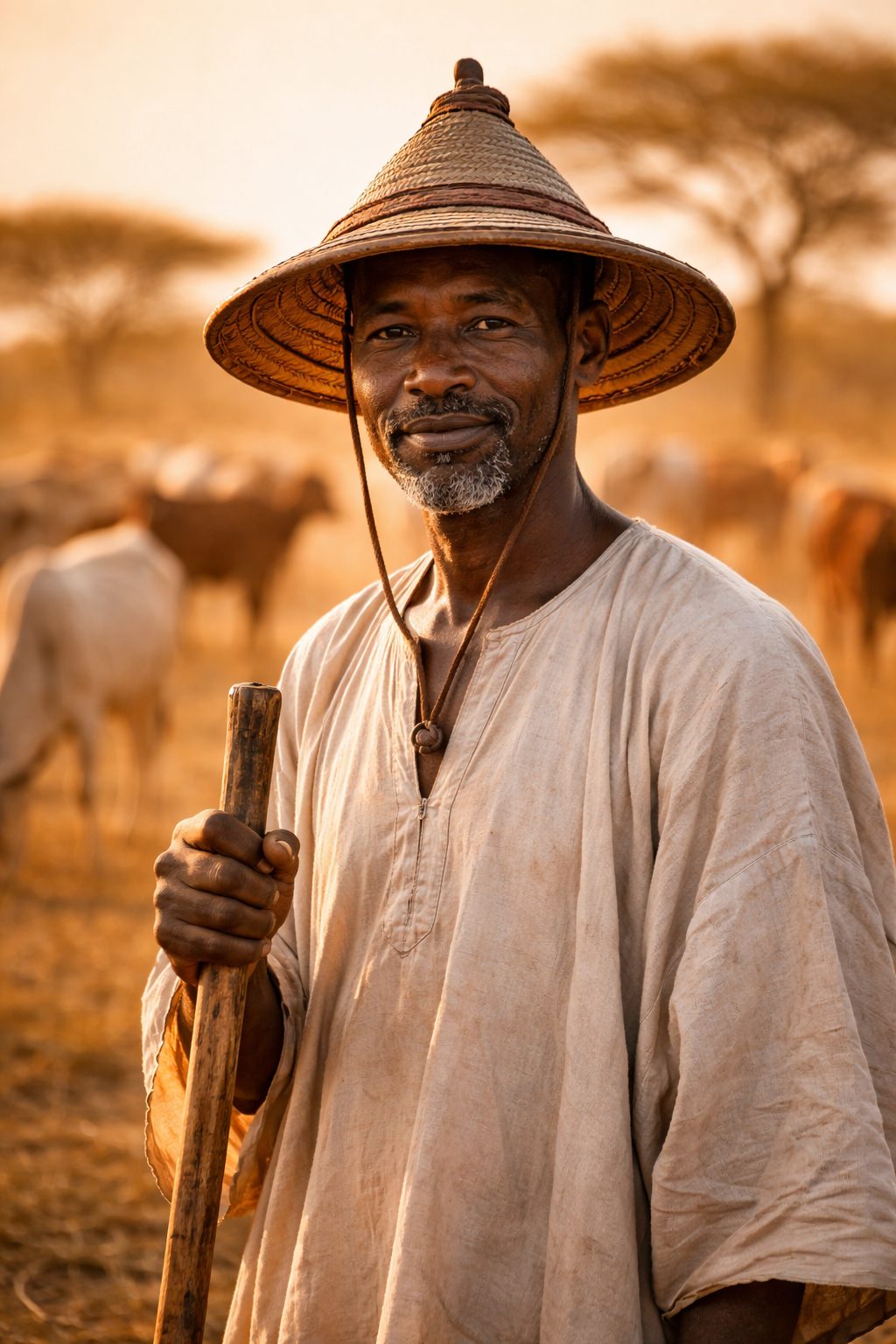
Livestock is the backbone of West Africa's economy and culture. Millions of families depend on it for their livelihood, and millions more rely on it for celebrations — Tabaski, weddings, naming ceremonies, and everyday meals. Yet every transaction has always required a leap of faith.
Garabaly is building the trust layer that Africa's livestock trade never had — a marketplace where every payment is escrow-protected, every negotiation happens as a conversation, and every trader's reputation follows them from the market to the phone and back.
Traditional trade
With Garabaly
In West Africa's livestock trade, buyers often need to travel long distances to inspect animals. Cash transactions leave no protection against fraud. Middlemen add costs without adding value. And there's no reliable way to verify an animal's health before purchase.
Meanwhile, the diaspora — millions of West Africans living abroad — have no way to buy livestock for their families back home for celebrations. These inefficiencies cost farmers their livelihoods and cost buyers their hard-earned money. Garabaly exists to change this.
Every transaction is a relationship. We didn't skip the negotiation — we digitized it.
of livestock crosses at least one border before reaching its buyer. These aren't clicks — they're relationships spanning thousands of kilometers. (CILSS / OECD)
Every transaction in West Africa is a relationship. You greet. You ask about the family. You inspect. You offer. They counter. You agree. That's not friction — that's culture.
Garabaly doesn't skip the negotiation. We digitized it. Because you can't digitize a marketplace without respecting how it actually works. Trust isn't built with a checkout button.
In West Africa, around two-thirds of livestock crosses at least one border before reaching its final buyer. This isn't e-commerce. It's relationships spanning thousands of kilometers. We built for that reality.
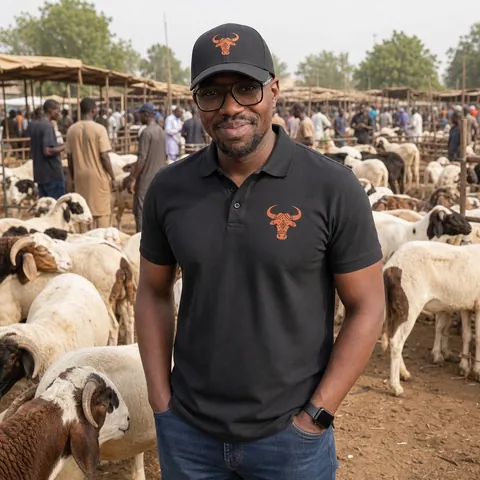
I grew up in the villages, lived with herders — and knew the fear of the journey home, money in your pocket.
I was a butcher as a schoolboy: the weight of the knife, Tabaski from sunrise to sunset.
I was sent to find the right animal at the right price — waiting under the sun, coming home empty-handed.
Now far away: sending a ram without being there, calling three times "is it done?".
"Garabaly wasn't born in an office. It was born from all of this."
I grew up in rural Mali. Not in Bamako — in the villages. Kenenkoun. Bouramabougou. Every week, I accompanied families to the weekly market. I lived with herders. I helped maintain their herds. I saw what it costs to walk for days to reach a market fair — and I know the fear of the journey home, when you've sold and all your money is in your pocket, on a road where everyone knows it.
When I was in school, I worked as a butcher to make a living. I know the weight of a knife, the precision of the cut, the difference between clean work and sloppy work. I know that during Tabaski, a butcher works from sunrise to sunset and every family depends on him. And I also know that the rest of the year, that same butcher waits — because there's no way to be known beyond his neighbourhood.
I was also sent to find livestock — long trips, across multiple markets, looking for the right animal at the right price. I've known the wait under the sun, the markets where nothing is good enough, coming back empty-handed, and the relief when you finally find one and the price holds.
Today, I live in the diaspora. And like millions of others, when Tabaski comes, when there's a baptism, a wedding, a funeral — I want to send a ram to my family. From far away. Without being there. Calling three times to ask: "Is it done? Was it a good one?"
I've been a herder. I've been a butcher. I've been a buyer. I am diaspora. Garabaly wasn't born in an office. It was born from all of this.
In March 2026, I registered Garabaly in Bamako at Mali's Trade and Movable Credit Register (RCCM). With that registration, we integrated mobile money services and built the foundations of a real company, by the book.
My commitment is simple: every feature on Garabaly is tested by real sellers in real markets. Every CFA franc is protected by escrow. And every decision is made by someone who has lived on all four sides of the market. Built here, for here.
Every feature starts with one question: does this make the transaction more trustworthy?
Full interface in French, English and Arabic (RTL) — voice reviews in any language.
Escrow holds your money until you enter your confirmation code — nothing before it.
Built for smartphones first — low-bandwidth and intuitive.
We partner with vets to encourage health certification before the sale.
A full wallet — deposits, transfers, mobile money — bringing traders into the digital economy.
Also from London, New York, Brussels, Montreal…
Millions of West Africans live abroad in Paris, London, New York, Washington DC, Brussels, and Montreal. They want to send livestock home for Tabaski, weddings, naming ceremonies, funerals, or simply to care for their families.
Garabaly makes this possible — browse verified livestock from anywhere in the world, negotiate with local sellers, pay in your currency (EUR, USD, GBP, and 135+ currencies via Stripe) with escrow protection, and have it delivered right to your family's compound. Real-time order tracking means you know exactly when the joy arrives.
Behind a simple interface, infrastructure built for security, speed and scale.
Every payment protected, every franc traced, released at your code.
Chat, voice, offline queue — even on low bandwidth.
Push and in-app alerts, deep-linked to your orders and wallet.
Device verification, encrypted confirmation code, security monitoring.
No herder sells in fear.
No buyer pays blind.
No family waits without proof.
of livestock commerce in West Africa every year, supporting some 20 million pastoralists (World Bank, 2024). The infrastructure connecting them has never existed. We're building it.
Your livestock. Your money. Your trust.
We see a continent where no herder sells in fear, no buyer pays blind, and no family waits without proof.
Livestock commerce in West Africa exceeds $1 billion annually. Across the Sahel and coastal West Africa, livestock underpins the livelihoods, celebrations, and food security of hundreds of millions of people — including some 20 million pastoralists (World Bank, 2024). Yet the infrastructure connecting herders to buyers, rural supply to urban demand, and diaspora capital to local markets has never existed. We started in Mali and we are expanding across the region because the gap is undeniable and the demand is already here.
We're not replacing how trade works. We're making it trustworthy.
Buyers, sellers, providers, diaspora — livestock trade is entering a new era.